Tax Newsletter - April 2026
Themes

RULES OF INTEREST
Discretionary authority not to sanction infractions related to the use of the Integrated Electronic Records System (SIRE).
Through National Superintendency of Internal Taxes Deputy Resolution No. 000019-2026-SUNAT/700000, published on April 30, 2026, the deadline for applying the discretionary authority not to administratively sanction the infractions set forth in numerals 2 and 10 of Article 175 of the Tax Code is extended, in accordance with the Annex to National Superintendency of Internal Taxes Deputy Resolution No. 000039-2023-SUNAT/700000, when such infractions arise with respect to the April and May 2026 tax periods.
Likewise, the deadline to correct the generation of records and/or make the corresponding adjustments in the SIRE is extended until June 30, 2026.
New districts in Ayacucho and Huancavelica are included within the scope of Law No. 27037, Law on the Promotion of Investment in the Amazon.
Through Law No. 32576, published on April 8, 2026, Law No. 27037 is amended in order to incorporate new districts from the regions of Ayacucho and Huancavelica within its scope.
As a result of this amendment, taxpayers domiciled in, and economic activities carried out in, the incorporated districts may access the tax benefits provided for in Law No. 27037, both in relation to Income Tax (reduced rate and other applicable incentives) and the Value Added Tax, in accordance with the requirements and conditions established in the said law and its regulations.
Amendments are made to Law No. 27037, Law on the Promotion of Investment in the Amazon.
Through Law No. 32582, published on April 15, 2026, various provisions of Law No. 27037 are amended with the aim of strengthening the investment promotion regime, incorporating criteria oriented toward innovation, economic recovery, and equity in access to tax benefits.
- Delimitation of the Scope of the Amazon Region: The definition of the Amazon region is clarified, expressly including within its scope the provinces of Cutervo, Jaén, and San Ignacio in the department of Cajamarca, with the exception of the district of Cutervo, as it falls within the scope of Law No. 29482, the Law for the Promotion of the Development of Productive Activities in High Andean Areas.
- Reconfiguration of the Executive Committee for Investment Promotion: It is established that the Executive Committee for Investment Promotion will promote public and private investment in Scientific Research, Technological Development, and Innovation in the Amazon region, incorporating universities and trade associations into its composition. This Committee will be responsible, among other functions, for approving the Amazon Concessions Master Plan and coordinating the evaluation of investment projects, for which purpose it shall be vested with powers similar to those granted to COPRI and PROMCEPRI.
- Requirements for Access to Tax Benefits: The requirement of effective linkage to the Amazon region is strengthened, establishing that, in order to benefit from the incentives provided under the law, taxpayers must demonstrate that at least 70% of their fixed assets and/or activities are located and carried out within such region.
- Exemption from Income Tax: The list of products classified as native and/or alternative crops is updated, in respect of which taxpayers in the Amazon region primarily engaged in agricultural activities and/or processing or transformation activities shall be exempt from Income Tax.
- The Executive Branch shall issue the corresponding implementing and supplementary regulations within a maximum period of one hundred twenty (120) calendar days, counted from April 9.
Extension of the Trial Ratings for the Tax Compliance Profile
By means of Supreme Decree No. 055-2026-EF, published on April 9, 2026, the number of trial ratings for the tax compliance profile is increased from eight (8) to twelve (12), with the purpose of allowing a longer period to assess the potential introduction of amendments to the Regulations of Legislative Decree No. 1535, which governs the classification of taxpayers required to comply with obligations administered and/or collected by SUNAT based on a compliance profile, applicable to taxpayers generating third-category income.
VAT Tax Refund Applicable to Aquaculture Activities
By means of Superintendence Resolution No. 000063-2026/SUNAT, published on April 9, 2026, the following provisions related to the VAT tax refund (Impuesto General a las Ventas) set forth in Law No. 31666, the Law for the Promotion and Strengthening of Aquaculture, are regulated:
- It is established that Virtual Form No. 1649 must be used to request such refund.
- The modification of the amount stated in the application is hereby enabled.
- The manner, conditions, timeframes, and frequency under which the Ministry of Production (PRODUCE) must submit to SUNAT the information related to the acquisitions covered by the benefit, the investment programs, and the entities authorized to carry out aquaculture activities are specified.
The functions of the Supervisory Notary (Fedatario Fiscalizador) are adapted to the digital environment.
Pursuant to Supreme Decree No. 058-2026-EF, published on April 15, 2026, the Regulations governing the Supervisory Notary, approved by Supreme Decree No. 086-2003-EF, are amended in order to enable the monitoring of compliance with tax obligations related, inter alia, to the issuance of payment vouchers in transactions carried out within digital environments. In this context, it is provided as follows:
- The rules regarding the authorization and identification of the Supervisory Notary (Fedatario Fiscalizador) are clarified, including digital identification mechanisms through a notice of intervention delivered to the taxpayer’s electronic mailbox.
- The provisions relating to the documents issued by the Supervisory Notary (evidentiary records, preventive records, and notes of return and/or restitution or consumption) are updated, allowing for their electronic generation and delivery through digital means.
- The intervention procedures applicable to transactions carried out in digital environments are regulated, including the verification of the issuance and delivery of payment vouchers, the restitution or refund of amounts, and the documentation of tax infringements set forth in the Tax Code.
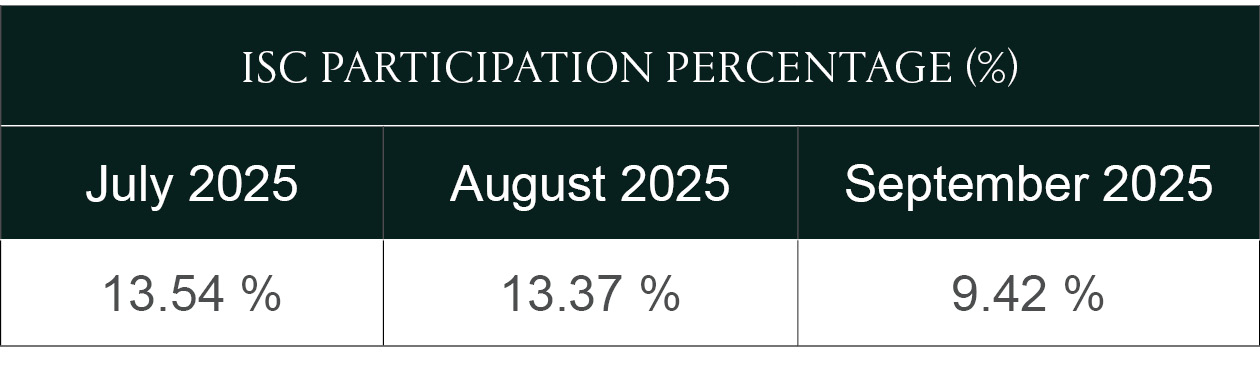
The maximum refund amount of the Selective Consumption Tax (ISC) is established for taxpayers engaged in the provision of land transportation services.
Pursuant to Superintendence Resolution No. 000067-2026/SUNAT, published on April 16, 2026, the percentage for determining the maximum amount of the ISC refund referred to in the Regulations of Urgency Decree No. 012-2019 is approved:
The Regulations of Law No. 32449, the Law that creates the Special Tax and Customs Regime for Private Special Economic Zones (ZEEP), are approved.
Pursuant to Supreme Decree No. 005-2026-MINCETUR, published on April 22, 2026, the Regulations of Law No. 32449 are approved, primarily developing the operational and institutional aspects for the implementation of the ZEEP, establishing the following main guidelines:
- The requirements and procedures for the qualification of the ZEEP are regulated, as well as those applicable to the call for applications, evaluation, and authorization of the Private Operator (PO), and the requirements to qualify as users of such zones.
- The permitted, complementary, ancillary, and prohibited activities to be carried out within the ZEEP are specified, in accordance with the provisions of Law No. 32449 and its Annex of restricted activities.
- The obligations of the PO and the users are established, and the supervision and oversight mechanisms under the responsibility of MINCETUR are developed, as well as the rules on interoperability and systems integration with SUNAT and other competent authorities.
- The regime of infringements and sanctions applicable to the PO is regulated, without prejudice to the sanctioning powers vested in SUNAT in tax and customs matters.
- Rules are set forth for the transformation of publicly administered Special Economic Zones into ZEEP, under the governing role of MINCETUR.
The specific provisions regarding tax and customs matters applicable to the ZEEP must be approved by the Ministry of Economy and Finance (MEF).
NATIONAL NEWS
Depreciation of fixed assets acquired through financial leasing in R&D&I projects.
Pursuant to Report No. 000023-2026-SUNAT/7T0000, SUNAT concludes that, in the case of fixed assets allocated to projects that have been qualified as scientific research, technological development, and technological innovation (R&D&I), which are acquired through financial leasing agreements, for purposes of the additional deduction provided for in Law No. 30309, the taxpayer may apply, on an exceptional and optional basis, the depreciation rate established in Legislative Decree No. 299, provided that the requirements set forth in such regulation, as well as in Law No. 30309 and its regulations, are complied with. Such treatment is deemed compatible with the application of the aforementioned additional deduction.
JURISPRUDENCE
Binding Nature of SUNAT Reports (Judgment issued in Case No. 00351-2025-PA/TC)
The claimant filed a constitutional amparo action against judicial decisions that declared inadmissible his cassation appeal and upheld an appellate judgment rejecting his claim that the statute of limitations had expired with respect to SUNAT’s authority to collect a tax debt, alleging a violation of his rights to effective judicial protection and to the proper reasoning of judicial decisions. In particular, he challenged the court’s refusal to apply Report No. 087-2016-SUNAT/5D0000, arguing that it had been erroneously treated as non-binding and that its impact on the suspension of the limitation period provided for in Article 46 of the Tax Code had not been properly analyzed.
The Constitutional Court upheld the claim, finding that the challenged decisions suffered from deficient external reasoning, as they were based on an incorrect premise regarding the nature and binding effects of the aforementioned report. In this regard, it clarified that such report constitutes an institutional consultation and, therefore, pursuant to Articles 93 and 94 of the Tax Code, is binding on all bodies of the Tax Administration, and not solely on the requesting body. Accordingly, it concluded that the Superior Chamber incurred in deficient reasoning by improperly equating the Tax Administration’s report with a private consultation and by failing to examine its impact on the determination of the statute of limitations for collection.
Limits on the Revocation of Administrative Acts Based on Untimely Invocation of Statute of Limitations (Tax Court Resolution No. 01063-11-2026)
The taxpayer argued that SUNAT improperly revoked an Intendancy Resolution that had upheld its request to revoke a Payment Order for Income Tax corresponding to fiscal year 2019, invoking—belatedly—the expiration of the limitation period for filing amended tax returns for the May and July periods of that year, thereby infringing the principles of legal certainty, procedural economy, and legality.
For its part, the Administration justified the revocation of the Intendancy Resolution based on paragraph 2 of Article 108 of the Tax Code, asserting that such act—although favorable to the taxpayer—had been issued without considering that the amended returns had been filed after the limitation period had elapsed, which, in its view, constituted a defect warranting its subsequent revocation.
The Tax Court declared the revoking Intendancy Resolution null and void, holding that the circumstance invoked by SUNAT did not fall within the grounds set forth in Article 108 of the Tax Code for the Tax Administration to revoke its own acts, since the expiration of the limitation period does not qualify as a subsequent circumstance nor as a material error, but rather as a pre-existing situation known—or that should have been known—by the Tax Administration at the time of issuing the resolution that was favorable to the taxpayer. Consequently, the Court concluded that the challenged Intendancy Resolution was null and void, having been issued in disregard of the legally established procedure, as the grounds for revocation set forth in Article 108 of the Tax Code had not been met.
Functional Characterization of a Transaction for Selecting the Most Appropriate Valuation Method Does Not Constitute, in the Specific Case, an Application of Rule XVI of the Preliminary Title of the Tax Code (Cassation No. 25241-2024-Lima)
The dispute concerned whether, based on the evidence presented, the transactions carried out by the taxpayer with its related party should be characterized as the distribution of goods—subject to analysis under the resale price method—or as logistical services, as argued by the company.
The Supreme Court dismissed the cassation appeal, finding that, in the specific case, the Tax Administration and the lower courts characterized the transaction based on contractual documents, purchase orders, invoicing, accounting records, delivery terms, and the functions performed by the parties, concluding that it corresponded to a goods distribution transaction rather than the provision of logistical services.
On that basis, the Court clarified that such characterization served a purpose strictly aligned with Article 32-A of the Income Tax Law in force during fiscal year 2007: namely, to identify the economic profile of the transaction and to select the most appropriate transfer pricing method. Accordingly, it did not constitute a legal recharacterization of the transaction nor a retroactive application of Rule XVI, but rather a functional analysis supported by the evidence on record to determine the arm’s length value in transactions between related parties.