Tax Newsletter - October 2026
Themes

REGULATIONS OF INTEREST
New version of the PLAME Electronic Payroll PDT (Virtual Form No. 0601) approved
Superintendence Resolution No. 0000213-2026/SUNAT, published on October 29, 2026, approves version 4.7 of Virtual Form No. 0601 to align it with the change in the statutory minimum wage.
This version must be used as of the October 2026 tax period.
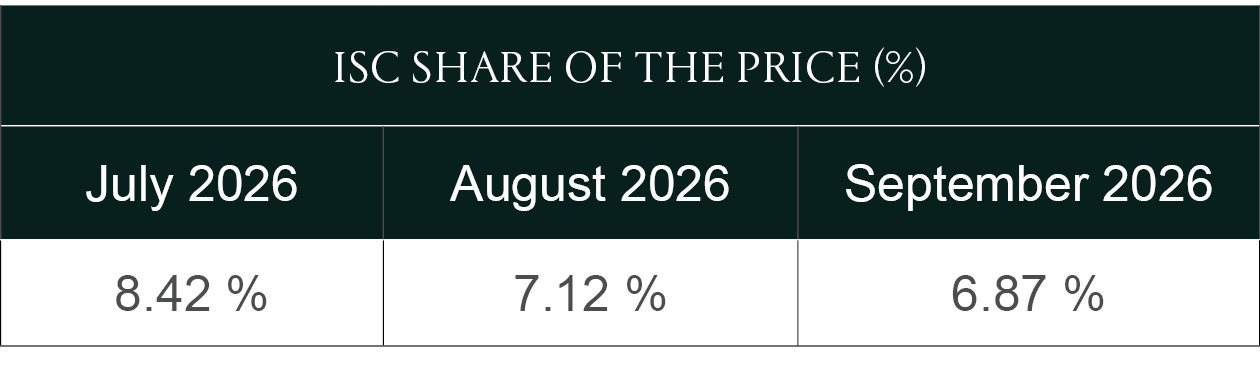
Maximum amount of the Excise Tax (ISC) refund determined for taxpayers engaged in land transportation services
Through Superintendence Resolution No. 000207-2026/SUNAT, published on October 22, 2026, the percentage used to determine the maximum amount of the ISC refund referred to in the Regulations of Emergency Decree No. 012-2019 is approved.
SUNAT exercises its discretionary authority not to impose penalties for infringements related to the issuance of dispatch guides
Through National Deputy Superintendence of Internal Taxes Resolution No. 000049-2026-SUNAT/700000, published on October 31, 2026, SUNAT decided not to impose administrative penalties for certain infringements set out in paragraphs 5 and 9 of Article 174 of the Tax Code (CT), relating to the obligation to issue dispatch guides (guías de remisión or GRs) to support the transportation of goods entering the country. The measure applies to the transportation of goods from the port terminals of Callao, Paita, Salaverry, Chimbote, Pisco, Ilo, Matarani, and Chancay to customs warehouses or premises temporarily designated as primary customs zones, as follows:
- Paragraph 5 of Article 174 of the Tax Code (applicable to the carrier): When goods are transported accompanied by documents that do not meet the requirements and characteristics to qualify as dispatch guides (GRs), with respect to infringements detected between November 1, 2026 and April 30, 2027; or when documents have been issued that do not meet the requirements and characteristics to qualify as electronic dispatch guides for carriers, with respect to infringements detected between March 1 and April 30, 2027.
- Paragraph 9 of Article 174 of the Tax Code (applicable to the sender): When goods are dispatched accompanied by documents that do not meet the requirements and characteristics to qualify as dispatch guides (GRs), or when documents have been issued that do not meet the requirements and characteristics to qualify as electronic dispatch guides for senders, with respect to infringements detected between November 1, 2026 and April 30, 2027.
DRAFT REGULATIONS
Proposal to incorporate information on the application of other valuation methods into the Local File Informative Return (Virtual Form No. 3560)
Through Superintendence Resolution No. 000199-2026/SUNAT/SUNAT, published on October 14, 2026, the draft Superintendence Resolution amending Annexes II, III, and IV of Resolution No. 014-2018/SUNAT, Regulations on the Filing of the Local File Informative Return (Virtual Form No. 3560), was made available for public comment. The draft seeks to incorporate information relating to the application of other transfer pricing valuation methods.
JURISPRUDENCE
Interest paid to non-domiciled companies: related-party status arising from a common director (Tax Court Resolution No. 02865-13-2026)
The Tax Court upheld the adjustment to Income Tax withholdings on interest payments made to a non-domiciled company. The taxpayer applied the 4.99% withholding rate; however, SUNAT determined that the applicable rate was 30%, on the grounds that both companies qualified as related parties.
The Tax Court held that a related-party relationship arises when companies have a common director who is able to participate in the adoption of financial, operational, or commercial decisions. It is not necessary for such director to have absolute authority, constitute a majority of the board of directors, or have actually exercised such authority through a specific decision. In the case under review, the same individual chaired the boards of directors of both companies, and the taxpayer itself had reported the foreign entity as a related party in its transfer pricing informative return.
Regarding the penalties for failure to withhold, the Tax Court clarified that the infringement is constituted when the income is paid or made available to the non-domiciled entity, rather than upon its mere accounting recognition. Accordingly, it set aside the penalties corresponding to periods for which payment of interest had not been evidenced; ordered the recalculation of the penalties for the months in which payments had been verified; and declared the penalty for August 2007 null and void, since neither the amount nor the exact date of payment had been established.
Tax audit initiated against a company extinguished as a result of a merger: nullity of the proceedings (Supreme Court Cassation No. 33870-2025, Lima)
The Supreme Court held that tax audit proceedings initiated against a company extinguished as a result of a merger by absorption are null and void, since the tax audit powers may only be exercised with respect to an entity that has legal existence at the time the proceedings are initiated.
In the case at hand, the Tax Administration initiated an audit against Telmex del Perú S.A., even though this company had already been absorbed by América Móvil Perú S.A.C. and its extinction had been duly recorded in the Public Registry. The Court clarified that this was not a mere error in stating the company’s corporate name, but rather a fundamental defect concerning the identification of the audited entity. Accordingly, the principle of preservation of administrative acts was not applicable.
The Court also held that the subsequent participation of the absorbing company, its response to the information requests, and the fact that the nullity was only raised at the appeal stage did not cure the defect in the proceedings. The Tax Administration was required to verify the legal existence of the taxpayer and initiate the audit against the absorbing company, which had succeeded to all rights and obligations of the extinguished company by universal succession.
Consequently, the Supreme Court dismissed the cassation appeal as unfounded and upheld the nullity of the tax audit proceedings, as well as the fines and other administrative acts issued on the basis thereof.