- Asian Investment Desk
- Banking and Finance
- Banking Regulation
- Capital Markets
- Corporate and Commercial
- Corporate Compliance
- Data Centers and Digital Infrastructure
- Energy
- Environmental
- ESG | Environmental, Social and Governance
- Fintech
- Fishery
- Forestry
- Immigration
- Infrastructure and Concessions
- Insurance and Reinsurance
- Intellectual Property
- International Trade and Customs
- Labor & Employment
- Life Sciences
- Maritime and Aviation
- Mergers and Acquisitions
- Mining
- Oil & Gas
- Privacy and Data Protection
- Project Development
- Project Finance
- Public Law
- Public Procurement
- Public Services Regulation
- Real Estate Investment
- Restructuring and Insolvency
- Tax
- Technology Transactions and Digital Law
- Telecom, Media & Technology (TMT)
- Venture Capital and Entrepreneurship
- Water Resources and Sanitation
- Wealth Management
Asian Investment Desk
Banking and Finance
Banking Regulation
Capital Markets
Corporate and Commercial
Corporate Compliance
Data Centers and Digital Infrastructure
Energy
Environmental
ESG | Environmental, Social and Governance
Fintech
Fishery
Forestry
Immigration
Infrastructure and Concessions
Insurance and Reinsurance
Intellectual Property
International Trade and Customs
Labor & Employment
Life Sciences
Maritime and Aviation
Mergers and Acquisitions
Mining
Oil & Gas
Privacy and Data Protection
Project Development
Project Finance
Public Law
Public Procurement
Public Services Regulation
Real Estate Investment
Restructuring and Insolvency
Tax
Technology Transactions and Digital Law
Telecom, Media & Technology (TMT)
Venture Capital and Entrepreneurship
Water Resources and Sanitation
Wealth Management
Alert
Public Procurement Alert - April 2026


April 23, 2026

Unfulfilled promises: First year in force of Law No. 32069, General Public Procurement Law
The entry into force of Law No. 32069, the General Public Procurement Law, was announced as a radical change in the management of public procurement in our country, encompassing the implementation of new procurement modalities and tools aimed at overcoming the rigidity and limited effectiveness of previous regulations, as was intended in the case of selection procedures with negotiation stages, competitive dialogue, or public procurement of innovation.
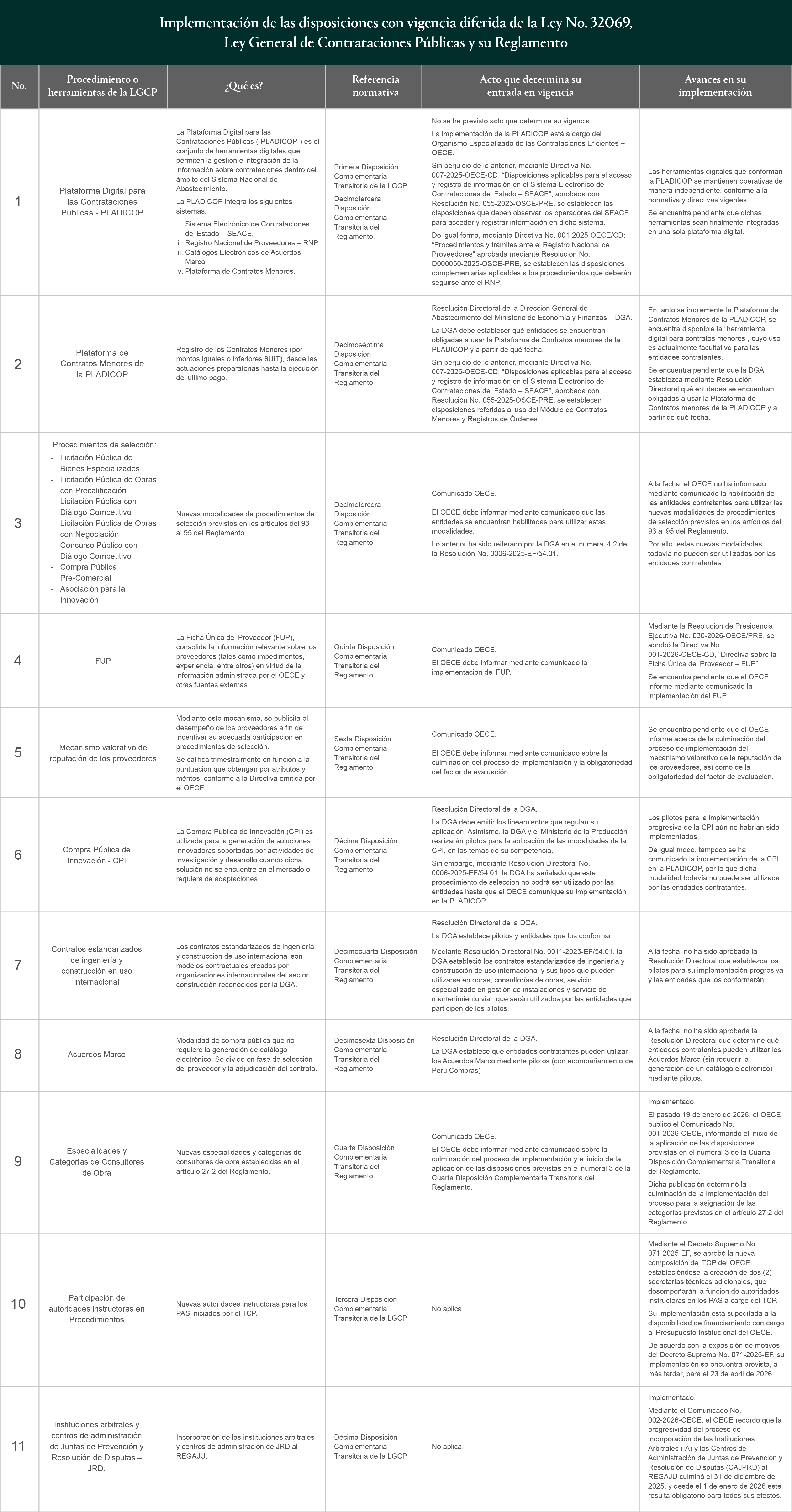
To date, almost all of these changes exist only in the text of the law and cannot be effectively used by public buyers or State suppliers, as detailed in the following table: